scale(.26458)'/%3e%3cpath d='m899.078 298.703-24.783-.103 77.876-129.564 90.044 151.173-13.96 21.656-76.699-129.804z' style='fill:lime%3bfill-opacity:1%3bstroke:%236463bd%3bstroke-width:.129099' transform='translate(-221.086 -44.663)scale(.26458)'/%3e%3cpath d='m938.837 232.403 12.357-20.565 79.068 128.9-181.777.102-12.75-22.33 155.778.425z' style='fill:%23f0f%3bfill-opacity:1%3bstroke:%236463bd%3bstroke-width:.129099' transform='translate(-221.086 -44.663)scale(.26458)'/%3e%3c/svg%3e)

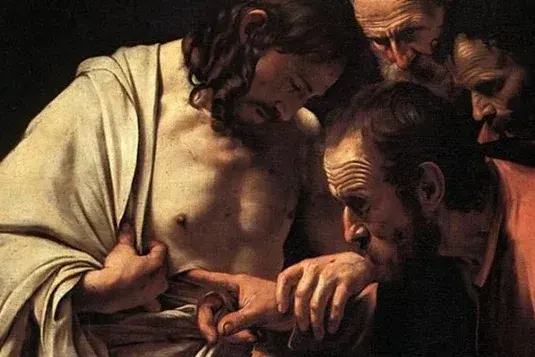
Table of contents
- Is It Unbelief to Ask God For Signs?
- Major Translations Disagree On Matthew 12:39
- Why the NASB and HCSB’s “Demanding/Craving” Makes More Sense
- Jesus Explicitly Wanted People to Believe on the Basis of Miracles
- The Lord Knows We Need Clarity and Doesn’t Mind Giving It
- Some Shame Dynamics In Christian Culture
- Notes
Is It Unbelief to Ask God For Signs?
Biblically speaking, the short answer is a resounding no!
Unfortunately, English translations of Jesus’ words are all over the place on the core verse in question:
Then some of the Pharisees and teachers of the law said to him, "Teacher, we want to see a sign from you."
He answered, "A wicked and adulterous generation _____ a sign! But none will be given it except the sign of the prophet Jonah…"
(Matt. 12:38-39)
Yup, I had to leave out the word in verse 39, because there is widespread disagreement on the best way to translate the Greek for this word.
Major Translations Disagree On Matthew 12:39
How do I know that this is the case? Just look at how vastly different the major English translations pick for the Greek verb epizēteō:
NIV: “asks for a sign”
ESV: “seeks for a sign”
HCSB: “demands a sign”
NASB: “craves a sign”
CEB: “searches for a sign”
“Demanding” or “craving” something is totally different from “asking”! Of the major committee-based English translations, the NIV, NRSVUE, and NET opt for ask. The ESV, NKJV for seek, and the HCSB, NASB use a more dramatic verb, crave/demand.
Well, what did Jesus mean? Did he say that it’s wicked for us to crave, ask, or search for a sign? This is one of those cases where looking at the Greek word epizēteō’s usage in the New Testament can be very useful. When this word is used in other verses, what is the English translation?
Why the NASB and HCSB’s “Demanding/Craving” Makes More Sense
The “Blue Letter Bible” app gives us an easy way to see how a specific Greek word is used throughout the Bible. It turns out that the biblical usage for epizēteō reveals that it carries a different meaning and context than our generic word “ask”.1 While the NIV translates epizēteō as “ask” in Matthew 12:39, it also translates epizēteō in the following ways:
- “run after” (Luke 12:30)
- a “thorough search” (Acts 12:19)
- “sought so earnestly” (Rom 11:7)
These uses are completely different meanings than our generic English word “ask”.
But the next question would be this: is there another Greek word for “ask” that might be more generic?
The answer is yes. The New Testament uses another Greek word that the NIV translates as “ask”: aiteō.
Aiteō occurs 67 times,2 while epizēteō occurs only 14 times. “Ask” is a very common word that, if you think about it, should probably occur more than 14 times in the entire NT. This led me to believe that aiteō might correspond more closely to the generic meaning, “ask”. And when we look at how it is used in the NT, the majority of instances of aiteō does indeed correspond more closely to the generic word “ask”. Epizēteō tends to be used in contexts where the asking or seeking being done is much stronger, like when the NIV translates it as “run after”.
This is why I think the NASB and HCSB’s choice of crave/demand makes more sense.
Jesus Explicitly Wanted People to Believe on the Basis of Miracles
Renowned biblical scholar R.T. France adds some helpful commentary:
In view of the OT precedent the request for a sign is not in itself objectionable, and indeed Jesus has already drawn attention to the evidential value of his miracles in 9:6; 11:4–6, 21, 23. But Jesus dismisses the present request because of the attitude of those who have made it. “A wicked and adulterous generation” is perhaps an echo of Moses’ description of rebellious Israel in Deut 32:5…Here the leaders’ challenge is taken to represent the sceptical attitude of the people in general. Their demand for a sign after so much clear evidence (note especially v. 28) betrays their fundamental opposition to God’s purpose as it is now focused in the ministry of Jesus. If they have not been convinced by what has already happened, what sort of sign can hope to persuade them?3
Jesus Himself wanted people to believe in Him on the basis of His miracles. He Himself even taught us that He performed miracles so that we could be amazed and therefore believe (John 5:20). So when the average Christian who has never seen a miracle asks God for a sign, this should not be understood as coming from unbelief!
Jesus was rebuking the Pharisees because they have already had so many signs from Jesus, and they are just like like the generation of Israelites in the wilderness who were always complaining, even though God showed them dramatic miracles in the wilderness. If God disapproves of people asking Him for a sign, why would He grant Gideon’s request for divine confirmation? The Lord didn’t rebuke Gideon, even though Gideon asked after seeing the angel of the Lord in person!
The Lord even revealed that He judges those who haven’t received as much miracles less strictly than those who have:
Woe to you, Chorazin! Woe to you, Bethsaida! For if the miracles that were performed in you had been performed in Tyre and Sidon, they would have repented long ago in sackcloth and ashes.
(Matt. 11:21)
Jesus holds Chorazin and Bethsaida to a higher standard than other cities who have not had the chance to experience supernatural miracles.
The Lord Knows We Need Clarity and Doesn’t Mind Giving It
Whenever God initiated something really important, the book of Acts shows us that God would give people supernatural dreams or visions so that they would know what to do.
God knows that we need His powerful voice for more dramatic situations. The Lord knew that Ananias needed a vision to be able to feel safe enough to go and pray for Saul to receive his sight (Acts 9:10-15); Saul was a violent persecutor of Christians. When it was time for Paul (previously Saul) to go to a new country God was calling him to, the Lord gave him a powerful vision (Acts 16:6-10). The Lord even had mercy on doubting Thomas, who after seeing 5 million miracles from Jesus wouldn’t believe in the report of Jesus’ resurrection until he himself touched Jesus’s side:
A week later his disciples were in the house again, and Thomas was with them. Though the doors were locked, Jesus came and stood among them and said, "Peace be with you!" Then he said to Thomas, "Put your finger here; see my hands. Reach out your hand and put it into my side. Stop doubting and believe."
(John 20:26-27)
Note that it was the Lord who initiated contact with Thomas, looking at him and telling him to put his finger into his side.
Yes, he received a rebuke, but he received that rebuke not because he wanted to see proof, but because he already had personally witnessed mountains of proof. If God was this merciful to someone like Thomas, how merciful do we need to be with atheists, hindus, muslims, other Christians, and even ourselves?
Some Shame Dynamics In Christian Culture
Are we ashamed of genuine questions and desires for evidence from God, but dismiss them because we have mistakenly judged these desires as coming from unbelief?
I believe this shame can impact us in two ways:
- It can make us judge ourselves as not being a faith-filled person, because we desire supernatural signs or concrete evidence.
- Because we are convinced that God disapproves of asking for signs, we end up believing that we must know what to do based upon our own perceptive faculties, because God isn’t speaking.
How Shame Hijacks Genuine Desire For Evidence
An underlying sense of shame causes us to jump to the conclusion that we are alone and must figure it out on our own, and that we are destined to a life of just needing to guess about God’s lead or run on a wild goose chase always trying to decode our imagination, and believe that God has some sort of disapproving attitude we aren’t allowed to ask about. How could we if He has made Himself clear that asking for signs is wicked? So we need to figure it out on our own. When this unconscious thought process is running in the background, shame has succeeded in creating unbelief in our hearts, because now, we are all alone and bad for wanting a sign and a more evidential relationship with God. All those disciples? Yeah, they could have it because they were His disciples, but I’m just destined to be guessing a lot. This is how I’ve thought, and I wonder how many others have thought the same.
What is the antidote for this? Rejecting/despising shame that we feel (Heb. 12:2) by getting bold with God. We must first recognize that we have a need. Lord, I want to know you on a deeper level, and no longer guess about things.
Then we get bold with God and bring Him our needs, trusting that He is a good Father, who already knows what we need:
For we do not have a high priest who is unable to empathize with our weaknesses, but we have one who has been tempted in every way, just as we are—yet he did not sin. Let us then approach God’s throne of grace with confidence, so that we may receive mercy and find grace to help us in our time of need.
(Heb. 4:15-16)
An Example of Getting Bold With God
I know that this works because I’ve done it myself.
Is a burden that I’m feeling light, or heavy?
I got tired of guessing around about what was from me, from God, or from the devil. I Got tired of trying to decode my imagination and prayer life and sort it into neat buckets of flesh, devil, God, or neutral. I told God, “Father, I’m tired of guessing.”
That might be easy for some, but try doing it when you think the Father has been holding out on you, wanting you to guess and figure it out on your own. That’s what I mean by getting bold with God, and that’s how you reject shame and combat it. Getting bold even when you think He might disagree with you. That doesn’t mean you speak with the Lord assuming you’re right and with no reverance. But it does mean you approach Him with not only just teachability, but radical honesty. The Psalms are filled with radical honesty coupled with tremendous respect and reverence. It was not just David and Asaph who wrote the psalms: these Psalms were inspired by the Spirit of God to help us babies talk to God better!
And what was the result for me? A more simple process for hearing God. Decreased levels of anxiety and frustration about what’s going on in my head. God giving me signs and indicators of His lead, and knowing what is Him and what’s not. Confidence and freedom in dismissing prophetic words, and/or dismissing things I felt like I heard from God that are odd/complex/borderline confusing. I’ve learned to be okay with a simple lifestyle.
That doesn’t mean it will be easy, straightforward, or instant, but I can tell you that over time, God answered my prayer to make Himself more obvious. He really does want our relationship with Him to not be a guessing game. He wants it to be as real for us as it was with the writers of Scripture! You can build a life of constant communion with God. It doesn’t mean that we won’t be tested or face difficulty, but it does mean that we can trade unnecessary complexity for simplicity.
We also need to understand that our modern world is culturally conditioned to not expect supernatural things to happen, and we are therefore at a disadvantage compared to the biblical authors, who regularly saw displays of God’s power. Because of this, my hunch is that God probably has more grace on people who don’t have a supernatural history built with God. We should give ourselves grace and others grace who have not experienced it.
If God doesn’t mind giving us evidence and confirmation, how does that impact the way we make decisions about our life? How does it impact the way we share our faith with others? It makes me want to demonstrate signs and wonders for others, because that is the heart of the Lord. We owe it to them, and we’ll see many people believe if they witness demonstrations of the Spirit’s power.
I don’t know about you, but knowing that Jesus would guide people supernaturally and is okay with wanting confirmation allows me to find rest in the fact that as long as I’m seeking Him, He’ll make it clear to me where I’m specifically called to go. We don’t need to guess or drum up what we “feel” might be God’s calling. We just need to stay close to Him, trusting that He will lead us! If we aren’t sure, we can ask for confirmation without fear of living in unbelief.
We need more supernatural encounters, the one way to embrace and cultivate the supernatural worldview of Scripture is to ask God for encounters, things that we know cannot be from our own imagination. We need to build a history with God, testing our experience against the Scriptures and logical thinking, and be excited about what God wants to give us. He is not against evidence, logic, and a desire to have an literal relationship with Him that closely mirrors physical relationships. The nearly everyone in Scripture did, why can’t we? How real do you want your relationship with Him to be?
Notes
Footnotes
-
https://www.blueletterbible.org/lexicon/g154/niv/mgnt/0-1/ ↩
-
France, R. T. The Gospel of Matthew (New International Commentary on the New Testament (NICNT)) (p. 489). Kindle Edition. ↩